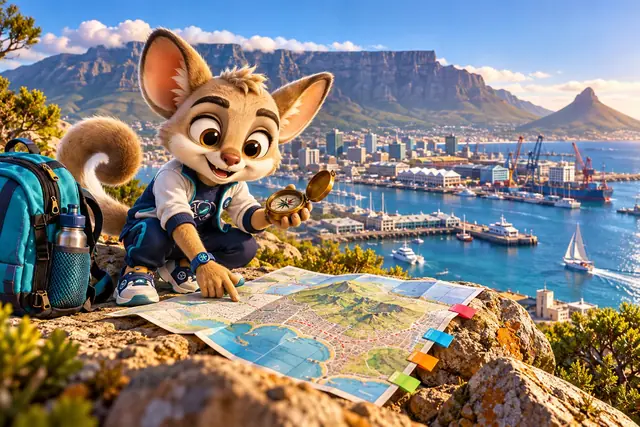
Term 1
Western Cape
Cape Town to Plettenberg Bay
Adding, subtracting, multiplying and dividing; factors and multiples; ratio and rate.
 Thinking adventures
Join Max and his friends on a different adventure in each grade. Along the way, use maths to explore ideas, solve problems and explain your thinking. How the adventures work
Grade 7 maths
Join Max as he explores South Africa, using Grade 7 maths along the way.
Choose the maths you need now. You can start at any time of year. See the route shows every stop of a term, in order.
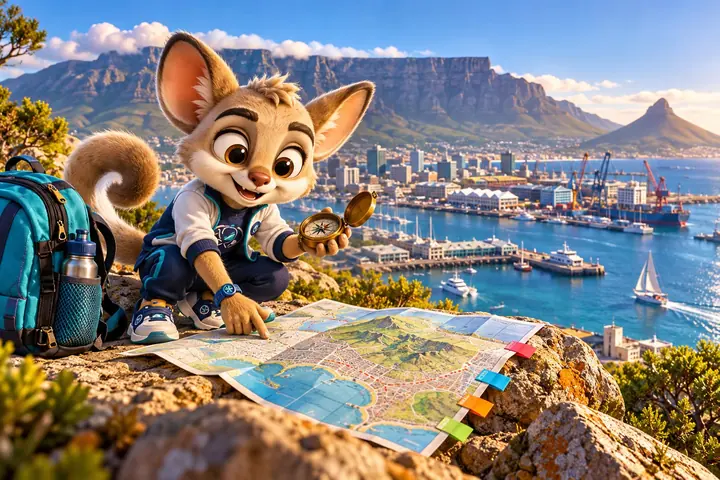
Cape Town to Plettenberg Bay
Adding, subtracting, multiplying and dividing; factors and multiples; ratio and rate.
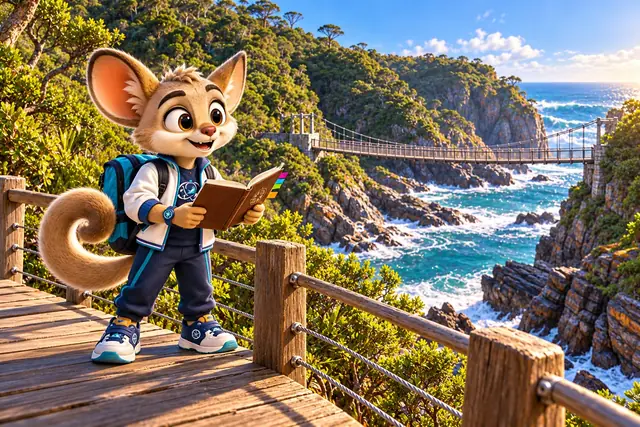
Storms River to Port St Johns
Scale, exponents, shapes, fractions, decimals and percentages.

Port Edward to Sodwana Bay
Fractions, decimals, percentages, area, volume, algebra and graphs.

Mbombela and the Panorama Route
Integers, straight-line graphs, data and probability.
For end-of-year practice.
The Grade 7 revision run: twenty-one stops up the road from Durban to Pietermaritzburg, one topic each.
See it with your own class or childA school or family account opens every stop, gives each child a page of their own that remembers where they are, and lets you set a stop as work in one tap.
Start a free trial →Log in
Grade 6 maths
Join Max and Tim as they journey across Australia and New Zealand, using Grade 6 maths along the way.
Choose the maths you need now. You can start at any time of year. See the route shows every stop of a term, in order.
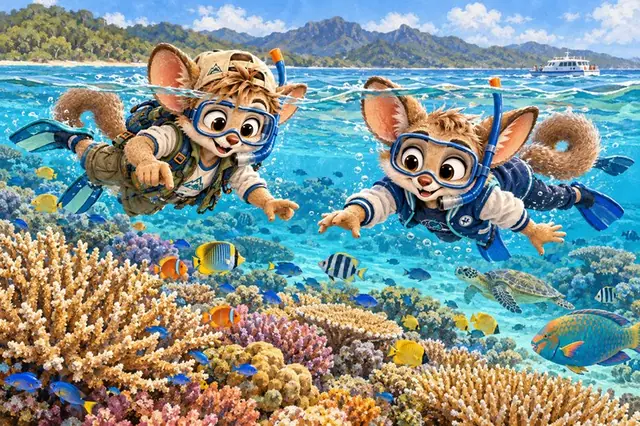
Sydney to the Daintree Rainforest
Place value, number sentences, adding and subtracting, common fractions, time, 2-D shapes, data and number patterns.

Canberra to Darwin, by way of Tasmania, the Red Centre and the west coast
Multiplying and dividing; 3-D objects, patterns and symmetry; ratio and rate, decimals and capacity.
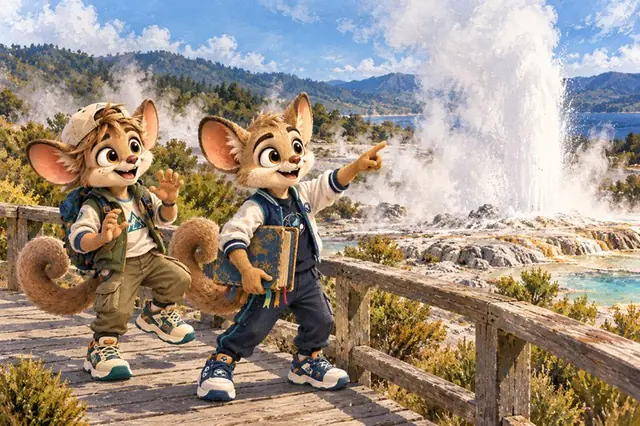
Cape Reinga to Wellington
Mass, adding and subtracting, viewing objects, 2-D shapes, transformations, temperature, percentages, data, number patterns and length.
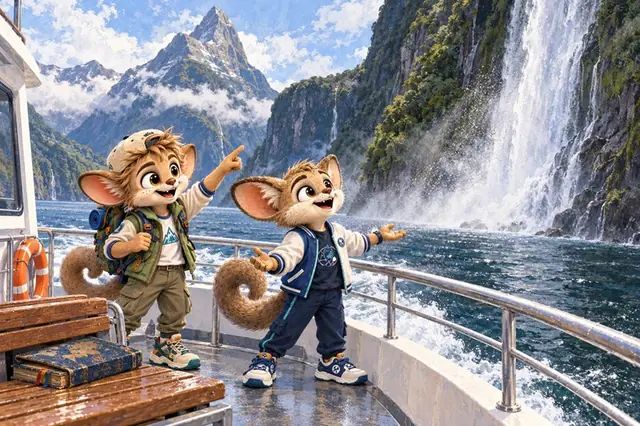
Picton to Queenstown
Multiplying and dividing, common fractions, 3-D objects, perimeter, area and volume, number sentences, transformations, position and probability.
For end-of-year practice.
The Grade 6 revision run: fifteen stops down the Dusi to Durban, one topic each.
The same paddle down the Dusi with friendlier numbers and smaller steps, for learning support.

Grade 5 maths
Join Max and his dog Teddy as they explore Europe, using Grade 5 maths along the way.
Choose the maths you need now. You can start at any time of year. See the route shows every stop of a term, in order.

London to the Cliffs of Moher
Place value, number sentences, adding and subtracting, number patterns, multiplying and dividing, time, data, 2-D shapes, capacity and volume.

Paris to Porto
Place value, adding and subtracting, common fractions and decimals, length, multiplying, 3-D objects, geometric patterns, symmetry and dividing.

Santorini to Zurich
Common fractions and decimals, mass, rounding, adding and subtracting, viewing objects, 2-D shapes, transformations, temperature, data, number patterns and multiplying.

Innsbruck to Santa Claus Village
Decimals, adding and subtracting, 3-D objects, common fractions, ratio, dividing, perimeter, area and volume, position and movement, tessellations, geometric patterns, number sentences and probability.
A route through the year’s maths, one stop at a time.

Each adventure has a route through the maths for that grade. The route is organised into four term games and is being developed around South Africa’s Curriculum and Assessment Policy Statement (CAPS). Its topics fall into five areas:
The stops follow a clear learning sequence, so earlier ideas help learners make sense of later work. Follow the route in order, or use the topic list to find a particular idea for extra practice or revision.

Each place on the game map is called a stop. It focuses on one maths idea.
Each stop helps learners understand a maths idea, practise it and use it to solve problems. Clear explanations and visual models show what the numbers mean and why the steps work. Practice in the game and on matching worksheets builds towards questions that ask learners to choose a method, explain their thinking and check that their answers make sense.
Each stop has five activities, called levels. Begin with Level 1 and work through them in order.
Find the connections
Work through the linked calculations in order. Look back at each answer: can it help you work out the next one? Explain the connection aloud or on paper.
Using known facts to work out new answers builds flexible calculation strategies. Learners develop a way to tackle numbers they cannot recall straight away.
Understand the idea
Follow How it works one step at a time. Match each step to the picture and calculation. Use Watch again if needed, then press Start to try the questions.
The pictures and worked examples show what the numbers mean and why the steps work, preparing learners to use the method themselves.
Use the maths
Read the story problem. Work out what you need to find, choose a method and show your working. Check that your answer fits the story, including any units.
Learners practise recognising when to use the maths and choosing a method that fits a situation. They connect the calculation to what the answer means.
Explain how you know
Read the answer, claim or method you are asked to check. Use a calculation, picture or example to explain your decision. If there is a mistake, show how to correct it.
Explaining a decision helps learners make sense of their thinking. It also reveals misunderstandings that a correct answer alone may hide.
Choose, test and rethink
Read the puzzle and its rules. Choose an idea to try, keep track of your moves or working, and check what happened. Change your approach if needed and explain what you found.
The challenge asks learners to make decisions and test ideas. Discussing their attempts helps them learn from what worked, what changed and another person’s approach.
As you work: follow each question’s instructions to type an answer or select a choice. Use Check where it is shown and read the feedback. Choose Hint when you need help with a step.
When you reach Finish the level, use it to complete the activity, then continue to the next level. The matching worksheet gives you space to draw, calculate and explain. One stop may take more than one session.
Each adventure includes an online Thinking Adventure and matching printable workbooks. They follow the same maths topics and are designed to be used together.
Explore the examples and questions with Max on screen, then use the workbook to draw models, record calculations and explain your thinking. Move between the adventure and workbook as you learn, practise and revise.
Choose a stop that matches your lesson. Use its examples to teach the idea, its questions for practice and its thinking task for group discussion.
Revisit an idea your child finds difficult. Work through the explanations together, then use the activities and worksheet to strengthen their understanding and calculation skills.
Use the topic list to choose work your child needs to revise. Try the questions and worksheet, discuss mistakes and return to an example when a step needs another look.
The completed programme is intended to cover the year’s CAPS maths content through four term games. Check each grade for the games and topics currently available.
You do not need to remember how you were taught. The most useful thing you can do is ask your child to show you what they did — on paper, with counters, or by drawing it.
Three questions that work on almost anything: How did you work that out? Is there another way? How do you know it is right?
If an answer is wrong, resist correcting it straight away. Ask them to check it against something they already know — that is the habit that makes maths stick.
Keep sessions manageable. A stop can take several sessions, with time for discussion and practice.
Teaching a class? The Teacher’s guide shows how to turn a stop into a lesson.